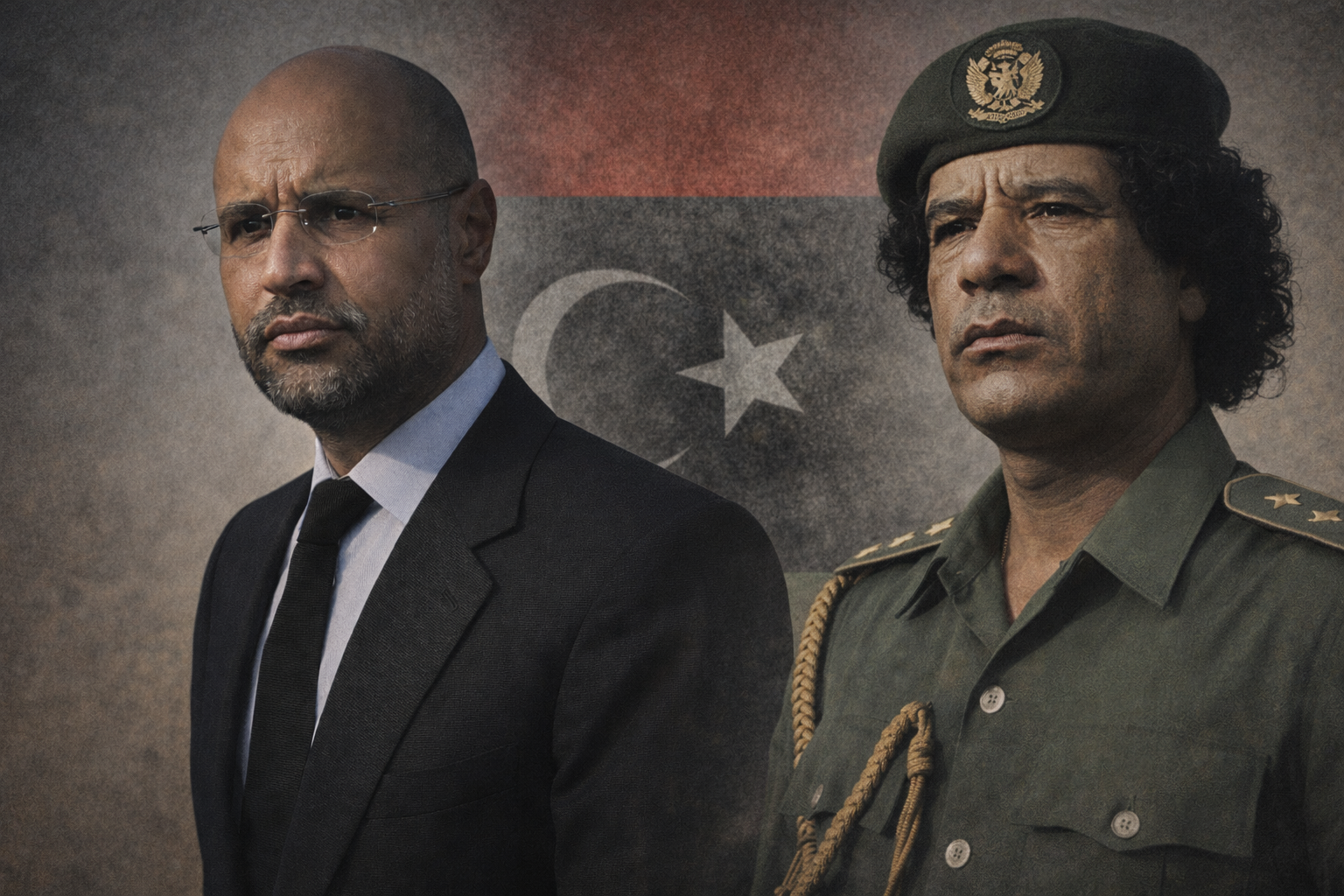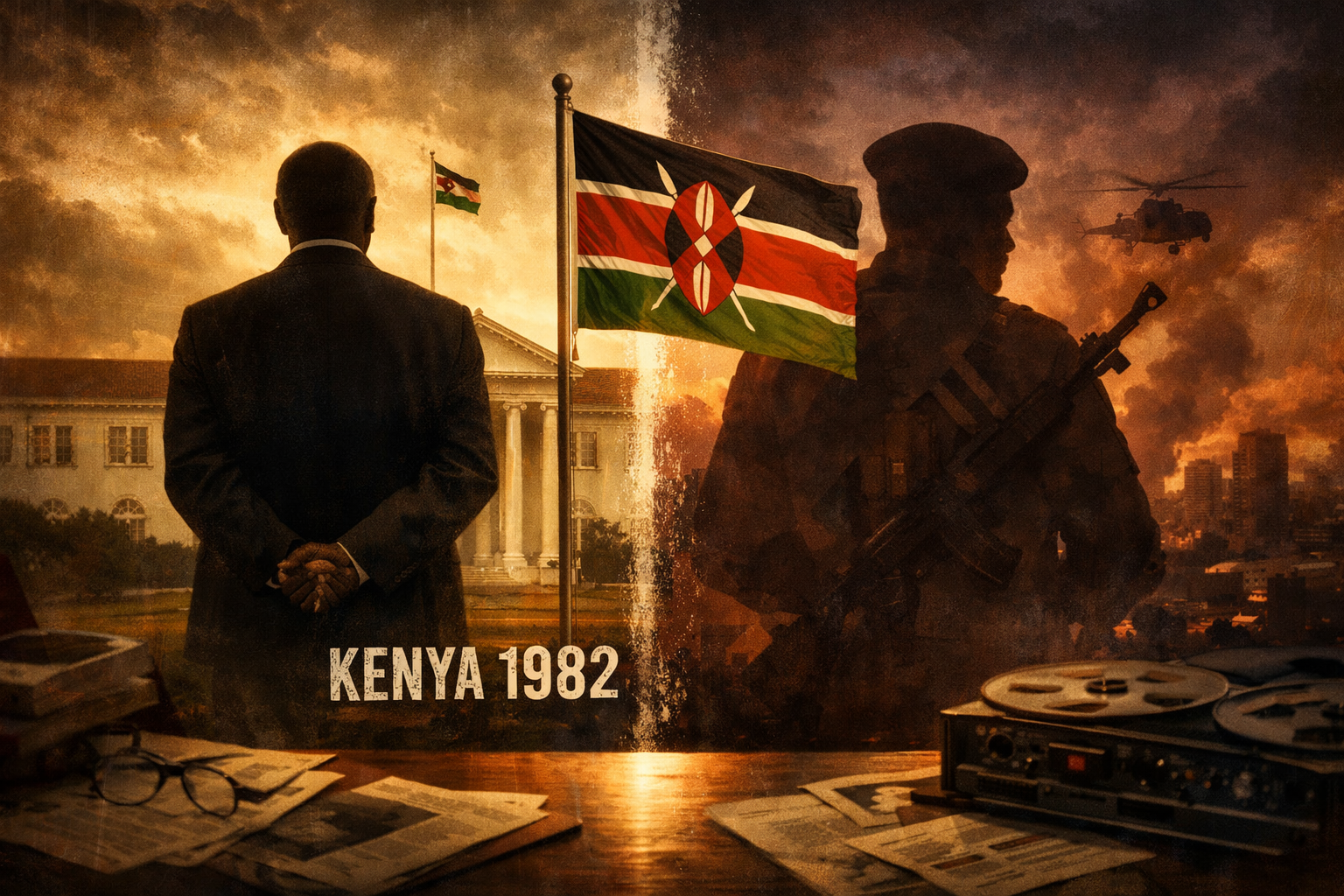
On the morning of August 1, 1982, Kenya was jolted awake by gunfire and a shocking announcement broadcast over Voice of Kenya radio: the government had been overthrown. Behind the uprising was a young Kenya Air Force serviceman, Senior Private Hezekiah Ochuka, a man whose ambition reportedly ran so deep that he carved the words “The Next President” onto his desk. What began as a daring gamble for power would collapse within hours but for a brief moment, the trajectory of Kenya’s history hung in the balance.
Ochuka did not act alone. Among those associated with the coup attempt were Sergeant Bramwel Obuon, Pancras Oteyo Okumu (J. Ogoya) and other junior ranks within the Kenya Air Force. In the wider political climate of the time, opposition figures such as Jaramogi Oginga Odinga were often mentioned in public discourse, though no conclusive evidence tied him directly to the military plot. The coup, however, suffered from fatal weaknesses: poor discipline, weak coordination, and critically low numbers. Only a fraction of the Air Force participated, while the Kenya Army and paramilitary units remained largely loyal to President Daniel arap Moi. Within hours, senior military leadership including Chief of General Staff General Mahmoud Mohamed reorganized resistance and suppressed the rebellion.
But what if the coup had succeeded?
Ochuka as President
Had the rebels consolidated control, Ochuka would almost certainly have declared himself Head of State, likely under a newly formed People’s Redemption Council (PRC). Yet even within the coup ranks, there were signs of internal friction. Tensions reportedly existed between Ochuka and Sergeant Bramwel Obuon over who would lead the PRC. A power struggle at the top could have emerged almost immediately, threatening the stability of the new regime.
To legitimize authority, the constitution which had just been amended in June 1982 to formalize Kenya as a one-party state under KANU — might have been suspended or scrapped altogether. Parliament would likely have been dissolved, and rule by decree introduced. Political parties and civil society groups could have faced severe restrictions under the justification of revolutionary change.
The Fate of Moi and His Loyalists
For President Daniel arap Moi, the consequences could have been dramatic and immediate. As Commander-in-Chief, Moi would likely have been arrested within the first hours of a successful takeover. In the volatile environment of a coup, detention, forced exile, or even execution would not have been unthinkable outcomes.
Senior figures loyal to Moi would also have faced swift retribution. Chief of General Staff General Mahmoud Mohamed, who played a decisive role in crushing the actual coup, would have been a primary target. Other senior military commanders in the Kenya Army and General Service Unit could have been arrested to prevent counter-coups.
Within the political establishment, powerful allies such as Vice President Mwai Kibaki, influential minister Nicholas Biwott, KANU chairman Joseph Kamotho, and Attorney General Charles Njonjo might have been detained or purged from government. Provincial commissioners and senior security officials aligned with the regime would likely have been removed. Such sweeping purges, intended to eliminate opposition, could have deepened divisions within both the armed forces and the broader political class increasing the risk of prolonged instability.
Economic Disruption
Even during its brief existence, the coup foreshadowed economic chaos. Parts of Nairobi experienced looting as discipline broke down among sections of the soldiers. Shops were ransacked and order temporarily collapsed. If Ochuka had successfully assumed power, the economic shock could have been severe.
Kenya in 1982 depended heavily on tourism, agriculture, and foreign investment. Political uncertainty might have triggered capital flight, investor withdrawal, and possible suspension of international financial support from institutions such as the IMF and World Bank. Tourism particularly in Nairobi and the Coast could have suffered immediate decline. The early looting seen during the coup hinted at deeper governance challenges that might have plagued a military regime.
A Prolonged Military Era?
If Ochuka had managed to consolidate authority and suppress counter-coups, Kenya might have entered a prolonged period of military rule. Across Africa during the 1980s, military governments were not unusual. Uganda, under Yoweri Museveni from 1986 onward, would demonstrate how a leader emerging from armed struggle could remain in power for decades. A successful 1982 coup in Kenya might have reshaped the country into a similarly centralized, military-backed state with extended presidential tenure.
Yet sustaining such power would have required unity within the security forces something the coup plotters lacked from the outset. The Kenya Army’s loyalty to Moi during the real events suggests that even if Ochuka had initially succeeded, a counter-coup was highly probable. The country could have entered a cycle of instability, repeated military takeovers, or factional violence.
Regional and International Impact
During the Cold War, Kenya was viewed as a relatively stable Western ally in East Africa. A sudden military regime might have unsettled relations with Britain and the United States. Diplomatic pressure, sanctions, or aid suspensions could have followed, depending on the new government’s orientation. Internally, ethnic and political tensions might have intensified if the coup leadership was perceived as favoring particular factions.
A Different Political Future?
Ironically, the failed coup strengthened Moi’s grip on power in the years that followed. Crackdowns intensified, dissent was curtailed, and detentions became more common. Yet Kenya would eventually transition to multiparty democracy in the 1990s.
Had Ochuka succeeded, that democratic transition might have been delayed, reshaped, or prevented altogether. Kenya could have experienced extended military rule, economic hardship, and recurring instability or, alternatively, a forced political reset that produced reforms sooner under different leadership.
History ultimately took one path. But for a few tense hours on August 1, 1982, Kenya stood on the edge of another — one where a young airman who dreamed of the presidency might have changed the nation’s destiny forever.